Termite Treatment In Texas: The Full Guide
What Is Termite Treatment In Texas?
Termite treatment in Texas means inspecting a home for termites and treating the species found, using methods matched to the construction of the building. A local pro checks the foundation, crawl space, attic framing, and wood around doors, windows, and plumbing entries, looking for mud tubes, swarmers, frass, and hollow-sounding timber. This page covers all 50 Texas cities on our list, from Abbott to Avinger, each with its own city page.
Texas had 31,290,831 people in the U.S. Census Bureau Population Estimates Vintage 2024, with homes ranging from Gulf Coast houses to High Plains homes. That spread is why this page gives state patterns and city pages give local facts. Treatment follows inspection in every case.
Which Species Affect Texas Homes?
Native eastern subterranean termites are the statewide baseline in Texas, living in soil and reaching timber through mud tubes. Formosan subterranean termites, an aggressive invasive species, are mainly a Gulf Coast problem and are now found in more than 30 Texas counties, with isolated finds elsewhere, while drywood termites, which live entirely inside dry wood with no soil contact, are mainly a coastal-county problem. The Texas A&M AgriLife Extension publication on subterranean termites is the state extension source for that pattern.
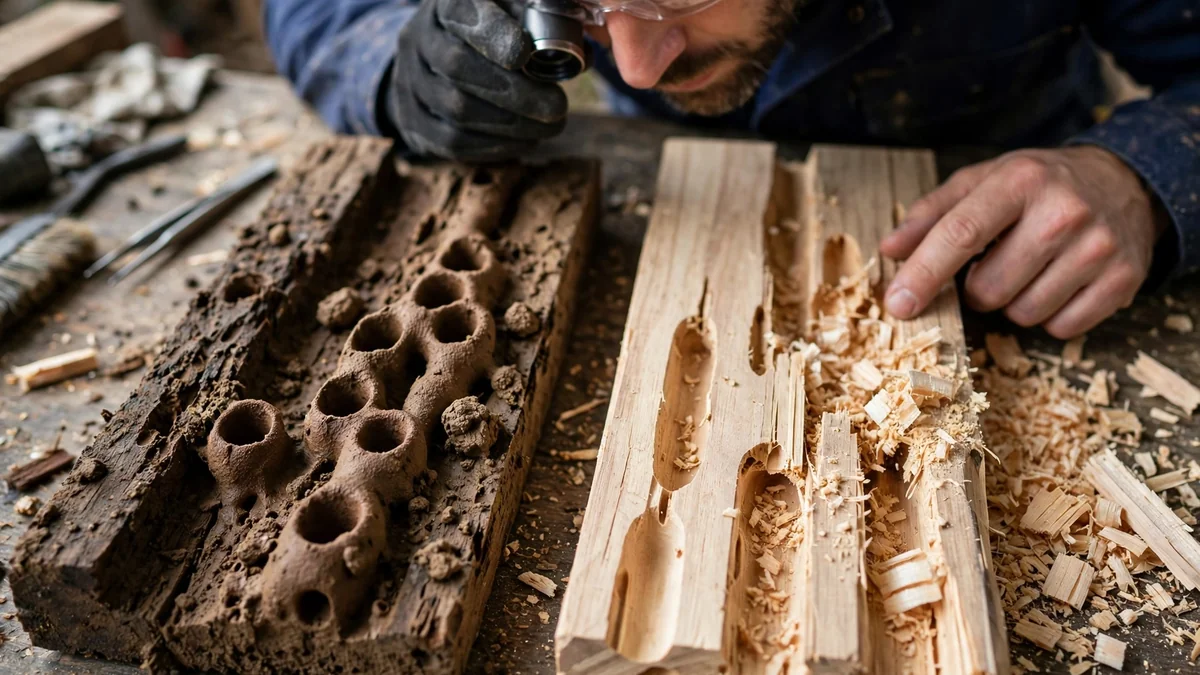
Species presence in any single home is confirmed by inspection, not assumed from the county or the region. Colonies follow soil, moisture, and timber, not administrative lines, so neighbouring homes can hold different species. That is why a pro identifies the species on site before choosing between a soil barrier, bait, wood treatment, or fumigation.
How Do Pros Inspect A Texas Home?
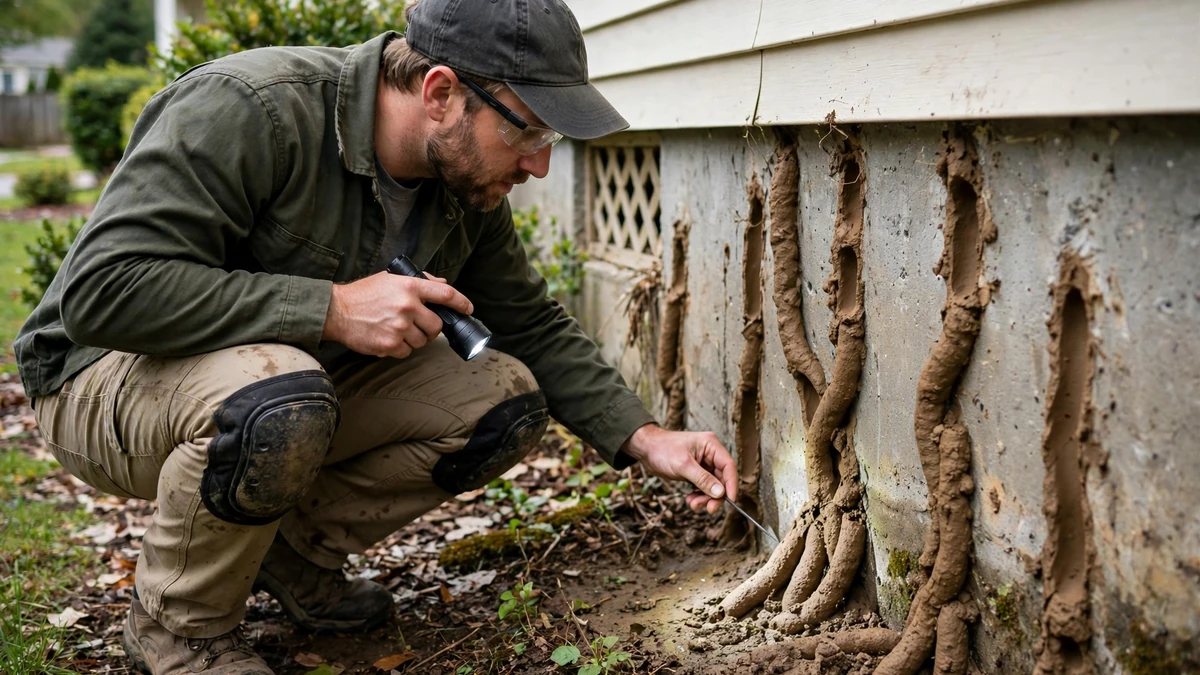
A Texas inspection starts outside, walking the foundation edge and checking soil levels, drainage, and wood-to-soil contact, then moves inside to probe and sound framing, joists, sill plates, and skirting boards. Crawl space and attic access are checked where it is safe to do so, and plumbing entries are a focus in slab homes, where subterranean termites enter through cracks, expansion joints, and pipe penetrations. The pro records mud tubes, swarmers, frass, and hollow timber, and judges whether activity appears current.
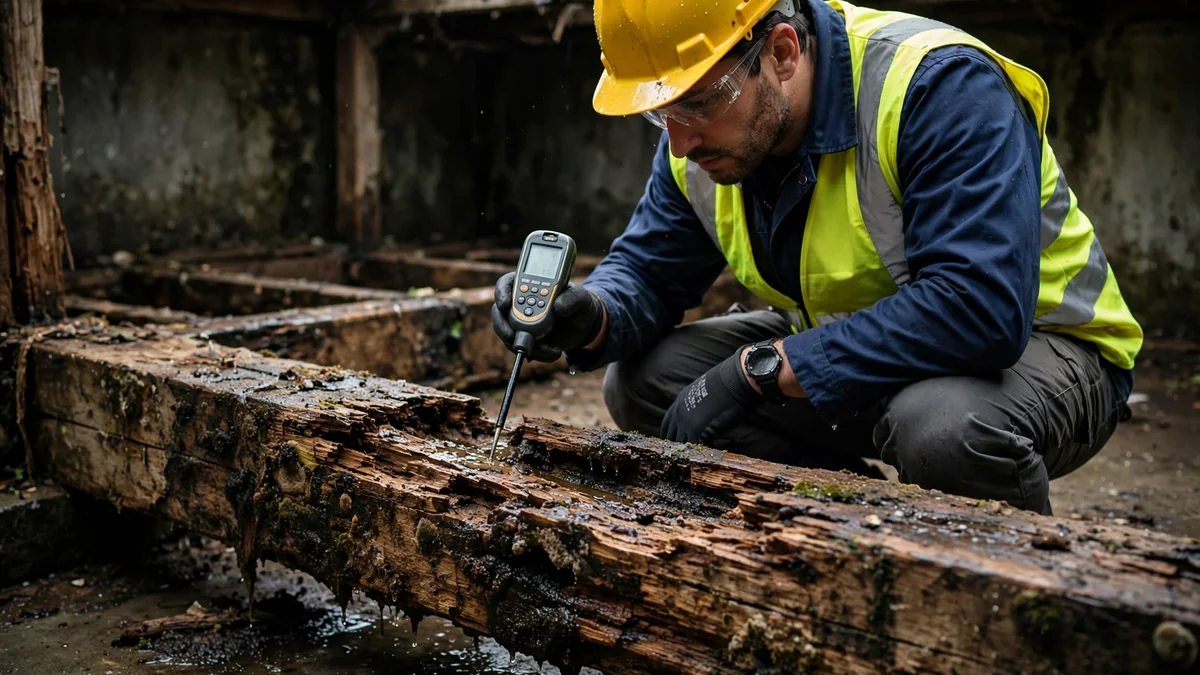
Thermal imaging and acoustic detection can support the visual inspection where activity may be hidden inside timber or behind walls, but neither tool diagnoses a problem on its own. Findings are checked against what can be seen and probed, and the inspection ends with an explanation of the species, the entry points, and the treatment options that fit the home.
Which Treatment Methods Are Used In Texas?
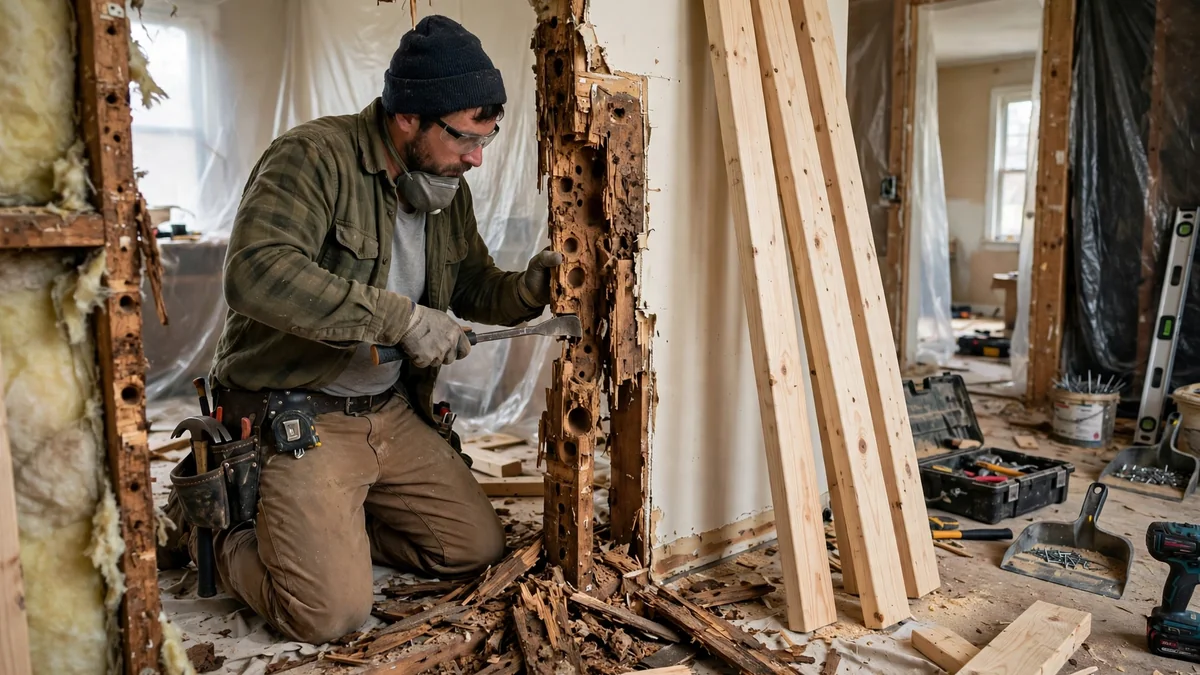
For subterranean termites, the usual methods are a liquid termiticide barrier, applied by trenching soil around the foundation and injecting under slabs, and bait stations in the soil around the home, where termites feed and carry bait back to the colony, with scheduled monitoring visits to show activity falling. For drywood termites, localised galleries can be treated with foam, dust, or direct wood injection, while widespread activity in many rooms may need whole-structure fumigation, and borate treatment suits exposed timber during repairs.
Pre-construction treatment protects a new Texas home before it is built, by treating soil under the slab and around footings, so the structure starts with a barrier subterranean termites must cross. No method suits every home: the choice depends on the species, the construction, and how far activity has spread.
What Affects The Cost In Texas?
No price is quoted on this page, because cost depends on the species found, the treatment method, the size and construction of the home, how far activity has spread, and how easy the affected areas are to reach. A small colony near one wall and a colony spread through framing are different jobs. After inspecting the home, a local pro explains the options and what each involves, so the decision is made with the findings in front of you.
Texas housing figures help explain why costs vary: the state had 12,128,515 housing units in the American Community Survey 2020–2024 5-year data, a median year built of 1992 in the same 5-year data, table B25035, and 62.6% owner-occupied homes in Census QuickFacts 2020–2024. Those figures carry their vintage exactly: Texas uses the 2020–2024 5-year release, not the 2024 1-year release used for Florida and Georgia. Older homes have had more years for colonies to establish, but newer homes still have the timber, slab edges, and plumbing entries termites use.
Insurance, Rules, And Prevention In Texas
Whether insurance covers termite damage depends on the individual policy, so check the policy wording and ask the insurer before assuming damage or treatment is covered, and keep the inspection record. Termite work in Texas is overseen through the Texas Department of Agriculture's Structural Pest Control Service, and the Texas Department of Insurance is the state agency for insurance questions; both are linked in the sources section.
Prevention in Texas means fixing leaks, keeping soil and mulch below timber, improving drainage away from the foundation, keeping firewood away from the house, and arranging regular checks. You can safely look for mud tubes, swarmers, and pellets and take photos, but do not disturb a colony or spray it before a pro has looked. The city pages on this site give the county, ZIP codes, and nearby cities for each of the 50 Texas cities.