
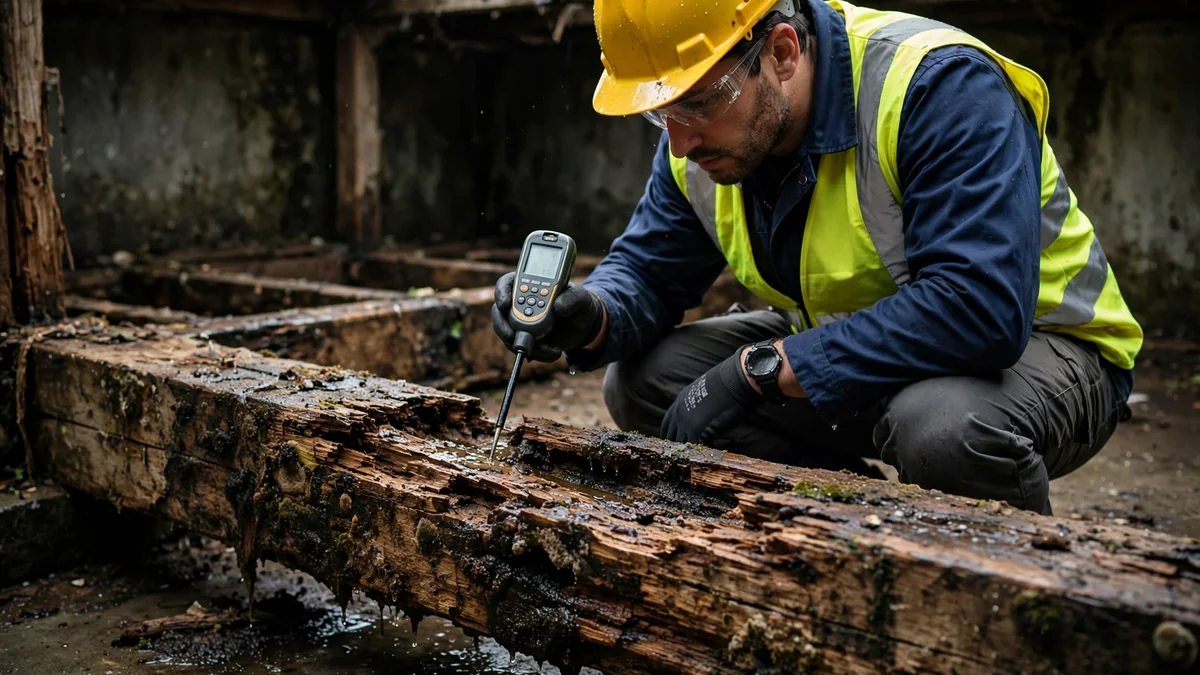
Dampwood Termites And Moisture-Damaged Wood
Why dampwood termites need very moist or decaying wood, and how pros find them.
Read Guide →Home › Blog › Termite Vs Carpenter Ant Damage
Reviewed By Hamza · Updated November 2, 2026 · Read time: about 10 minutes
 Call Now · (555) 000-0000
Termite damage signs · Carpenter ant damage signs · Frass vs pellets · Swarmers vs flying ants · Why identification matters · What a pro checks
Termite damage and carpenter ant damage look similar at first glance, but they are caused by different insects and need different responses. Termites eat wood, while carpenter ants tunnel through wood to nest in it and do not eat it. A local pro can identify which insect is present by checking the damage pattern, any pellets or frass, and signs of live activity.
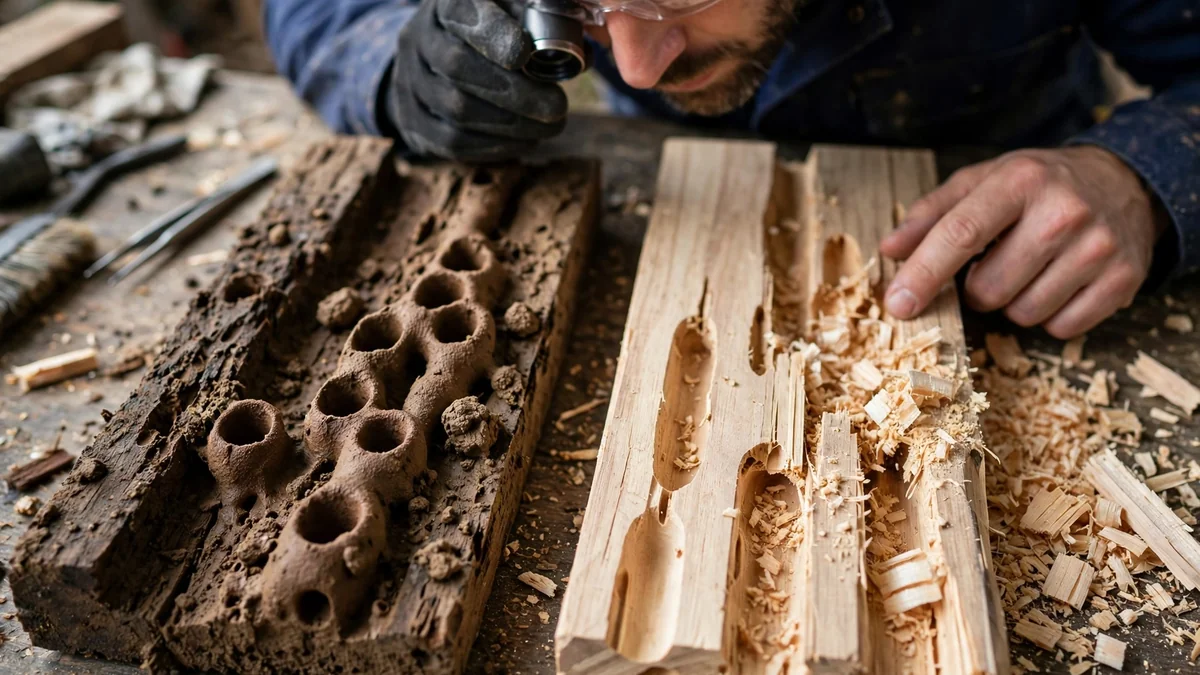
Termite damage usually shows as hollowed wood with galleries that follow the grain, often with mud tubes nearby when subterranean termites are involved. Carpenter ant damage looks cleaner, with smooth galleries that cut across the grain, and piles of coarse sawdust-like shavings near nest openings. The cleanest clue is what is left behind: termites leave mud or pellets depending on species, while carpenter ants leave wood shavings and insect parts.
Carpenter ants do not eat wood. They chew through damp or softened wood to hollow out nesting space, then push the shavings out of the nest. That is why their damage often looks like smooth tunnels with piles of frass-like shavings below. Termites, by contrast, feed on the cellulose in wood, so their galleries are often packed with soil or pellets. Knowing this difference helps a pro choose the right inspection approach.
Termite damage often shows as wood that sounds hollow when tapped, paint or plaster that blisters or buckles, and floors or doors that sag or stick. Subterranean termites may leave pencil-width mud tubes on foundation walls, while drywood termites push small hard pellets out through tiny kick-out holes. Damage can stay hidden inside framing for a long time, so visible signs usually mean the colony has been active for a while.
Carpenter ant damage shows as smooth, clean galleries inside wood, often in damp areas such as around leaks, windows, or roof edges. You may see coarse shavings, sometimes mixed with dead ants, below a nest opening, and hear faint rustling inside a wall at night. Unlike termite damage, the galleries are usually empty and clean, because the ants are nesting rather than feeding on the wood itself.
Termite swarmers and flying ants both appear in spring swarms, but their bodies differ. Termite swarmers have straight antennae, a broad waist, and two pairs of wings that are equal in length. Flying ants have bent antennae, a pinched waist, and front wings longer than their back wings. Discarded wings near windowsills also point to swarmers, and a pro can confirm the species from a sample or photo.
Identification matters because termite treatment and carpenter ant treatment target different behaviour. Termite work focuses on the colony and its routes into wood, whether through soil, mud tubes, or inside dry timber. Carpenter ant work focuses on finding the nest, fixing the moisture that attracted it, and removing the colony. Treating for the wrong insect wastes time and leaves the real problem in place, so identification comes before any treatment plan.
Related cities: Termite Treatment Alachua, FL · Termite Treatment Acworth, GA · Termite Treatment Allen, TX
Cities where termite damage repair help is available by phone.
Short, direct answers to the questions homeowners ask most, with the facts a local pro checks on site.
The main difference is that termites eat wood, while carpenter ants only tunnel through it to nest. Termite galleries often follow the grain and contain soil or pellets, depending on the species, while carpenter ant galleries are smooth, clean, and cut across the grain. Carpenter ants also leave coarse wood shavings near nest openings, whereas termites leave mud tubes or small hard pellets. A pro checks these clues together before naming the insect.
Carpenter ants can weaken wood over time when a large nest hollows out beams, joists, or framing, especially where moisture has already softened the timber. The risk grows when a nest goes unnoticed for years or sits in a load-bearing member. A pro can judge how far the galleries run and whether a contractor should check the structure. Fixing the moisture source matters as much as removing the ants, or a new nest may form nearby.
Termites do not leave ordinary sawdust. Subterranean termites leave mud tubes and soil-packed galleries, while drywood termites push out small, hard, six-sided pellets called frass through kick-out holes. Piles of coarse, fibrous shavings are more typical of carpenter ants, which push nesting debris out of their galleries. If you see fine pellets rather than shavings, drywood termites are the likelier cause, and a pro should confirm it.
Carpenter ants often point to moisture problems, because they prefer damp or softened wood for nesting. Leaks around roofs, windows, plumbing, and gutters, plus wood that touches soil, all create the conditions they favour. Finding carpenter ants is therefore a useful warning to check for leaks and drainage problems, not just to remove the ants. A pro can trace the nest back to the damp timber that attracted it.
Do not break open galleries, mud tubes, or nest openings to check the insect yourself. Disturbing a colony can scatter it, make inspection harder, and hide the signs a pro uses to identify the species. Instead, note where you saw damage, shavings, pellets, or swarmers, take a photo if it is safe, and leave the area alone until a local pro inspects it. Careful observation helps more than disturbing the nest.
Yes, termites and carpenter ants can infest the same home, sometimes in different areas, because both are drawn to damp or damaged wood. One problem does not rule out the other, and treating only the insect you noticed first can leave the second colony active. A full inspection checks framing, crawl spaces, attics, and damp areas, so both insects are found before any treatment plan is agreed.
If swarmers appear indoors, collect a few in a sealed bag or jar if you can do so safely, note the room and date, and avoid spraying the area. Spraying can scatter swarmers and hide the signs a pro needs. Swarmers indoors usually mean a mature colony is nearby, so call a local pro promptly for identification and inspection, and keep the sample for the pro to examine.
Carpenter ant damage sometimes needs repair, depending on how much wood was hollowed out and whether the member carries weight. Shallow galleries in trim may only need filling and finishing, while deep galleries in framing may need a contractor to judge reinforcement or replacement. Repair follows removal of the colony and fixing of any moisture problem, so the same timber is not hollowed out again.
A pro identifies the insect by combining several clues: gallery shape, pellets or shavings, mud tubes, swarmer body shape, and signs of live activity such as fresh debris or movement. Probing and sounding wood, checking damp areas, and tracing damage back to its source all help. When signs are unclear, the pro may monitor the area or take a sample, rather than guessing, because the treatment plan depends on getting the species right.
Reviewed By Hamza
Certified Structural Pest Control & Termite Control Specialist
Hamza is a licensed structural pest control specialist with extensive field experience diagnosing and treating subterranean, Formosan, and drywood termite infestations across Georgia, Florida, and Texas. He specializes in thermal acoustic inspections, non-repellent liquid perimeter trenching, sub-slab pressure injections, borate wood preservation, and bait station monitoring systems to safeguard residential and commercial properties against catastrophic structural wood loss.
Updated November 2, 2026
Guides that explain the next step, from repair to prevention.
Why dampwood termites need very moist or decaying wood, and how pros find them.
Read Guide →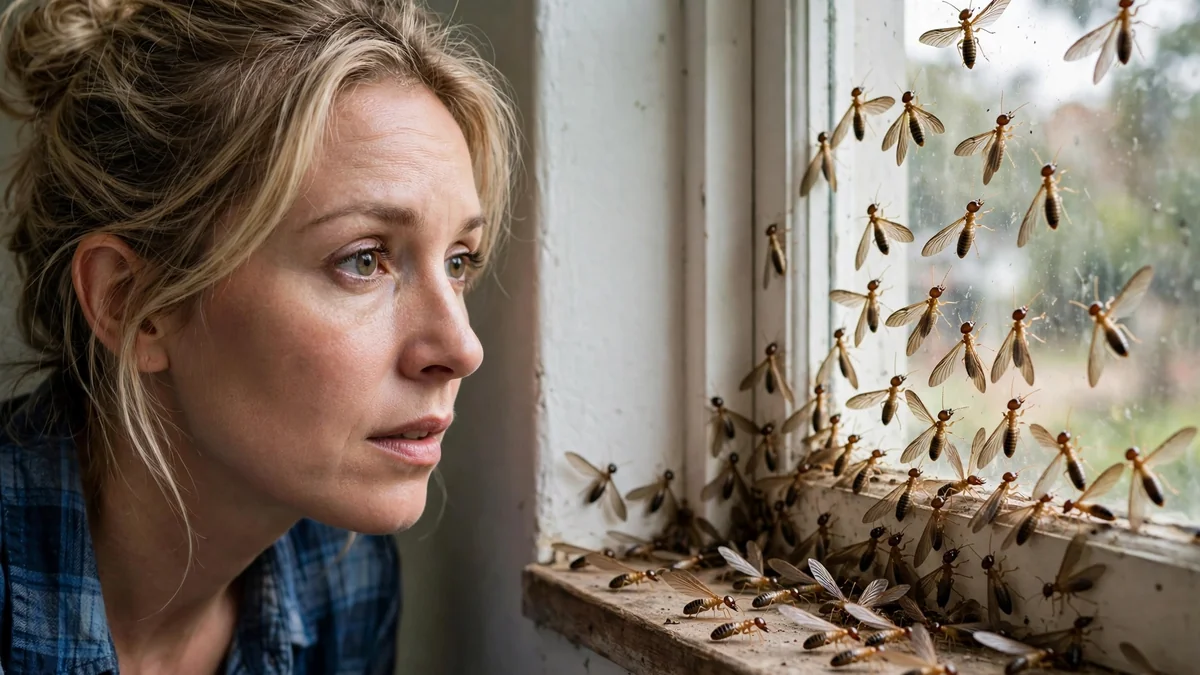
Termite swarmers indoors: what to do right now, and what not to do.
Read Guide →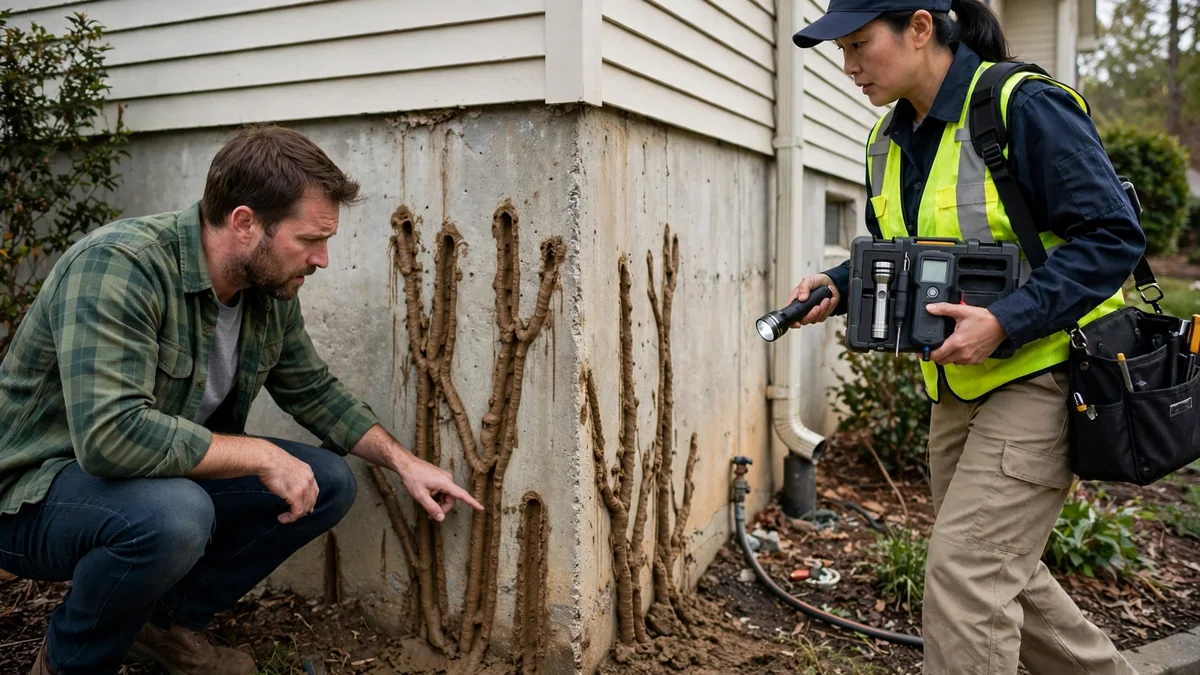
Found termites? A safe first-hour checklist before a pro arrives.
Read Guide →