
Termite Swarm Season In Florida, Georgia And Texas
Termite swarm season in Florida, Georgia and Texas: timing inspections by state.
Read Guide →Home › Blog › Formosan Termites Gulf Coast
Reviewed By Hamza · Updated November 2, 2026 · Read time: about 10 minutes
 Call Now · (555) 000-0000
What Formosan termites are · Why the Gulf Coast matters · Colony size and behaviour · Signs · Inspection focus · Prevention
Formosan termites are an invasive, aggressive subterranean termite found in southern coastal states, and the Gulf Coast is one of the areas where they pose a serious concern. Their colonies can grow large, and they can damage timber quickly once established. A local pro in a coastal area checks for Formosan activity specifically, because the treatment plan must match the colony's size and behaviour.
Formosan termites are an invasive subterranean termite species, originally from East Asia, now established in southern coastal areas of the United States. They live in soil and build mud tubes to reach wood, like other subterranean termites, but they are known for large colonies and fast feeding. Their presence in a coastal area changes the inspection focus, because a colony that is missed can grow and spread through connected timber.
The Gulf Coast is at risk from Formosan termites because its warm, humid climate, coastal soils, and long building season suit the species, and because ports and trade helped it establish there. Homes near the coast often have the damp timber, mulch, and soil contact that subterranean termites favour. Risk varies by local conditions, so a pro judges each home on its timber, moisture, and history, not on its coastline alone.
Formosan colonies differ from other subterranean colonies mainly in size and feeding speed: they can grow much larger than native subterranean colonies, with many more workers feeding at once. They may also nest above ground in damp timber, such as in a leaking roof void, without returning to soil. That above-ground nesting matters, because a treatment plan aimed only at soil routes may miss a nest sitting in the structure itself.
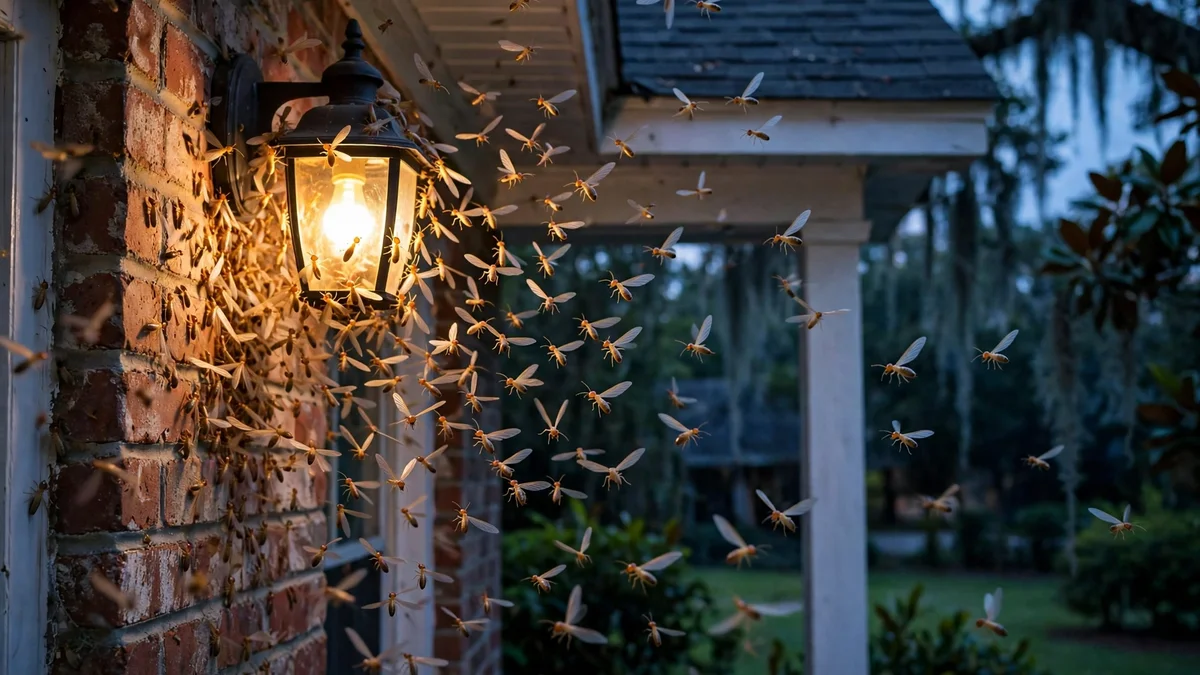
Signs of Formosan termites include mud tubes on foundation walls, swarmers around lights in warm months, discarded wings near windows, and wood that sounds hollow or crumbles when probed. A distinctive sign can be carton nest material, a paper-like substance built inside wall voids or roof spaces from chewed wood and soil. Any of these signs in a coastal home should prompt a prompt inspection, because colonies can grow quickly.
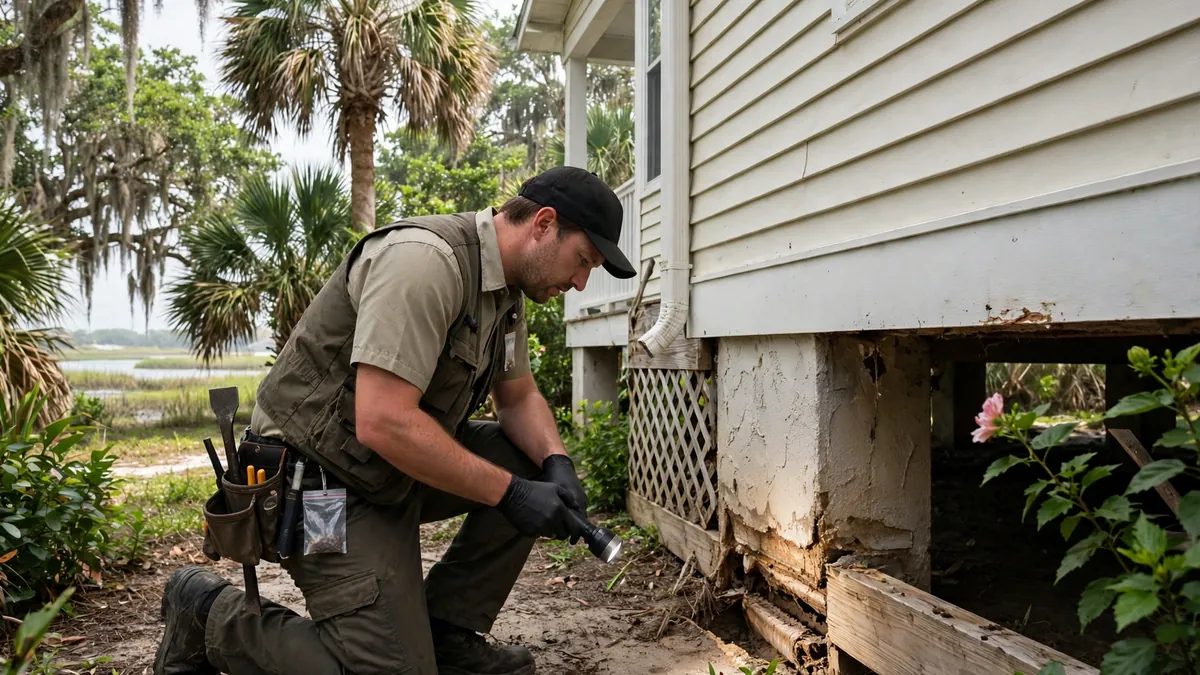
Pros inspect for Formosan termites by checking foundation walls, mud tubes, crawl spaces, attics, and roof voids, and by tracing tubes and damage back to the colony's location. They look for above-ground nests as well as soil routes, because Formosan colonies may sit in damp structural timber. Thermal and acoustic tools may help where used, but confirmation still rests on signs, samples, and careful tracing of the colony.
Coastal homeowners can reduce Formosan risk by keeping wood away from soil, fixing leaks and drainage, clearing mulch and debris from foundation walls, and arranging regular inspections. Early detection matters more with a fast-feeding species, because damage grows while a colony stays hidden. A local pro sets inspection timing for the home and advises on soil treatment or bait systems that fit the colony and foundation found.
Related cities: Termite Treatment Apollo Beach, FL · Termite Treatment Allenhurst, GA · Termite Treatment Anahuac, TX
Cities where termite damage repair help is available by phone.
Short, direct answers to the questions homeowners ask most, with the facts a local pro checks on site.
Formosan termites are often described as more damaging than native subterranean termites, because their colonies can grow larger and feed faster, so damage can advance more quickly once established. That does not mean every Formosan colony causes severe damage, because extent depends on how long it has been active and which timber it reached. Early inspection matters precisely because a fast-feeding colony leaves less time to catch it.
Yes, Formosan termites can nest above ground in damp timber, such as in roof voids, wall cavities, or other spots where leaks keep wood wet. Above-ground nests, sometimes built from carton material, do not need a soil connection, which makes them harder to find and treat than a purely soil-based colony. A pro checks damp voids as well as foundation routes when Formosan activity is suspected.
Formosan termites swarm in warm months, often in the evening around lights, but no fixed dates are given here, because timing varies by local weather and colony. Swarmers near lights or windows, and piles of discarded wings, are useful warning signs in coastal areas. Note the date, place, and number seen, keep a sample if it is safe, and call a local pro for identification, because swarmer shape helps confirm the species.
Formosan termites can damage trees, stumps, and other woody plants, as well as homes, because they feed on cellulose wherever it is available. Infested trees near a home can act as a nearby colony source, and dead trees or stumps close to a foundation add risk. A pro checks trees and woody debris near the home as part of inspection, and advises on removing infested timber that sits close to the structure.
Coastal homes in Formosan areas often benefit from more frequent inspections than homes in lower-risk areas, because a fast-feeding colony can advance between annual checks. The right interval depends on the home's history, moisture, and past findings, and a local pro sets it after inspection. Regular checks catch mud tubes, swarmers, and carton nests early, when treatment is simpler and damage is smaller.
Treatment for Formosan termites depends on the colony's location: soil barriers and bait systems target soil-based colonies, while above-ground nests may need direct treatment of the nest area. A pro maps the colony first, because a plan aimed only at soil will miss an above-ground nest, and a plan aimed only at the nest will miss soil routes. The method follows the colony map, not the species name alone.
Formosan swarmers look similar to other termite swarmers to most homeowners, with straight antennae, a broad waist, and equal-length wings, so reliable identification usually needs a pro or a sample examined closely. Body size and colour can hint at the species, but they are not enough on their own. If swarmers appear in a coastal home, keep a sample if it is safe and let a local pro identify it.
Formosan termites can affect home sales on the Gulf Coast when inspection reports show activity or damage, because buyers and lenders ask for treatment, repair, or clearance before closing. A clear inspection history, treatment records, and repair documentation help a sale move forward. Sellers in coastal areas should arrange inspection early in the sale process, so findings can be dealt with before closing deadlines.
If you find mud tubes on a coastal home, do not break them open or spray them, because disturbing a colony can scatter it and hide the signs a pro uses to map it. Note where the tubes run, take a photo if it is safe, and call a local pro promptly for inspection. In a Formosan area, prompt action matters, because a colony can grow while tubes are left unchecked.
Reviewed By Hamza
Certified Structural Pest Control & Termite Control Specialist
Hamza is a licensed structural pest control specialist with extensive field experience diagnosing and treating subterranean, Formosan, and drywood termite infestations across Georgia, Florida, and Texas. He specializes in thermal acoustic inspections, non-repellent liquid perimeter trenching, sub-slab pressure injections, borate wood preservation, and bait station monitoring systems to safeguard residential and commercial properties against catastrophic structural wood loss.
Updated November 2, 2026
Guides that explain the next step, from repair to prevention.
Termite swarm season in Florida, Georgia and Texas: timing inspections by state.
Read Guide →
Termite swarmers indoors: what to do right now, and what not to do.
Read Guide →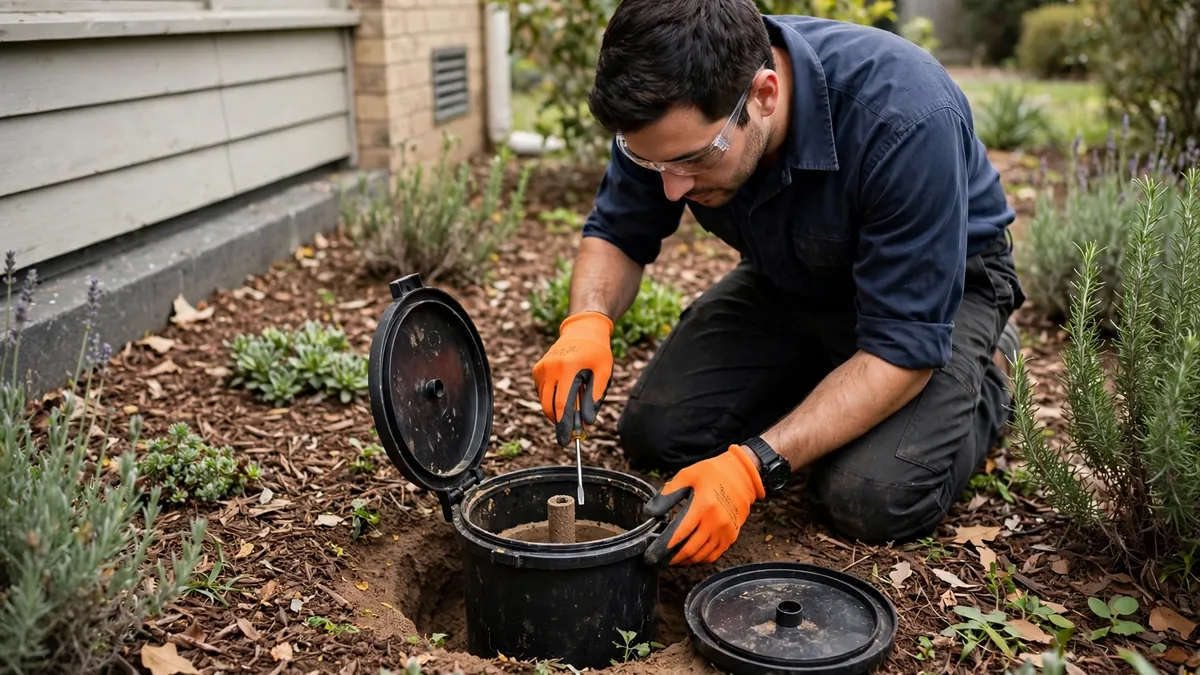
After termite treatment: monitoring, annual inspection, and what to watch for.
Read Guide →