
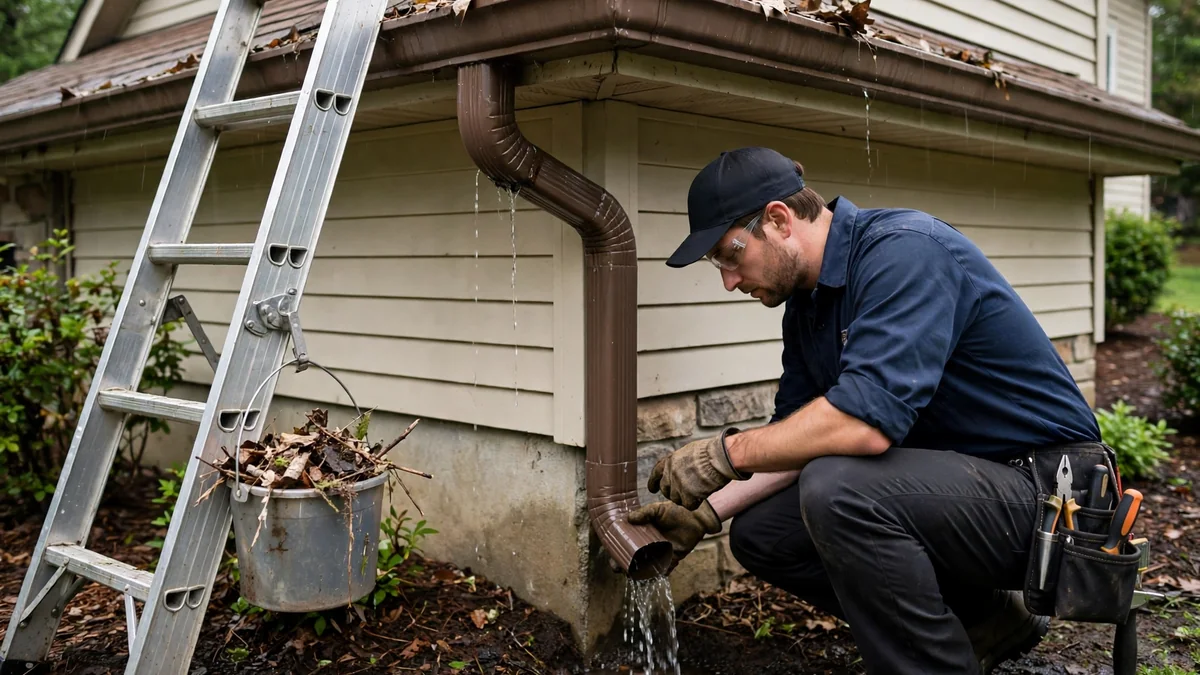
Preventing Termites: Moisture, Leaks And Gutters
Fixing leaks, gutters and drainage so timber stays dry and less attractive to termites.
Read Guide →Home › Blog › Moisture Meter Termite Inspection
Reviewed By Hamza · Updated November 2, 2026 · Read time: about 9 minutes
 Call Now · (555) 000-0000
What a moisture meter is · What readings mean · Why inspectors check moisture · Where they check · Limits of readings · What happens next
A moisture meter is a device that measures how much moisture is in wood and walls, and inspectors use it because damp timber attracts termites and hides their activity. High readings point a pro toward leaks, drainage problems, and timber worth probing more closely. A reading alone does not prove termites are present, but it shows where conditions favour them and where inspection should focus.
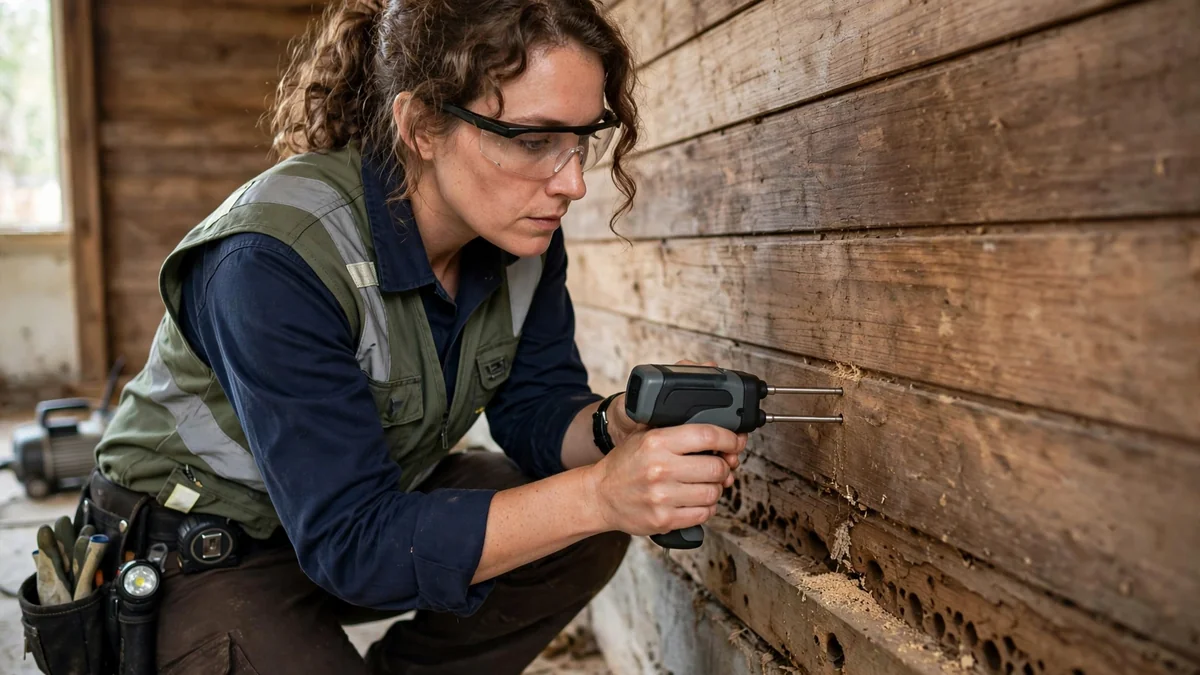
A moisture meter is a handheld device that measures moisture in wood, plaster, and other building materials, either with pins pressed into the surface or with a sensor held against it. Inspectors use it during termite inspections to find damp timber that may attract termites or hide galleries. The meter gives a reading for that spot at that moment, so a pro takes readings in several places and compares them, rather than relying on a single number.
Termite inspectors check moisture because damp wood attracts termites, supports dampwood colonies, and softens timber so subterranean termites can feed more easily. Moisture also hides damage: wet plaster or paint can mask galleries underneath. By mapping damp areas, a pro can find the leaks, drainage faults, and ground-contact timber that create termite risk, and can decide which areas need closer probing or follow-up.
Moisture readings show relative dampness in a material, not a diagnosis on their own. A high reading in one spot, compared with dry timber nearby, suggests a leak, condensation, or drainage problem worth tracing. A low reading does not guarantee that termites are absent, because drywood termites need no extra moisture. A pro reads the pattern across a home, together with visible signs, rather than treating one number as proof.
Inspectors check moisture around the places water reaches timber: bathroom and kitchen plumbing walls, window frames, roof edges, foundation walls, crawl spaces, and any wood that touches soil. They also check spots with past leaks, staining, or bubbling paint, because those marks suggest water has reached the timber before. Each reading helps build a map of damp areas, which guides the rest of the inspection.
Moisture meters have limits: they measure the spot they touch, they can be affected by surface finishes and materials, and they cannot see termites directly. A meter cannot confirm a species, find a colony deep inside dry timber, or replace probing, sounding, and visual checks. That is why a pro combines meter readings with other inspection methods, and why a single high or low reading should never be read as a final answer.
After high moisture is found, a pro traces the source, whether a leak, gutter overflow, grading problem, or condensation, and checks the damp timber for termite signs. The homeowner is advised to fix the water source, because treatment alone leaves damp timber open to a new colony. Follow-up readings can confirm whether the fix worked, and the pro sets inspection timing based on what was found.
Related cities: Termite Treatment Altamonte Springs, FL · Termite Treatment Alpharetta, GA · Termite Treatment Alvin, TX
Cities where termite damage repair help is available by phone.
Short, direct answers to the questions homeowners ask most, with the facts a local pro checks on site.
A moisture meter cannot find termites directly, because it measures dampness in wood and walls, not insects. What it can do is point to damp timber where termites are likelier to feed and where damage may hide, so the pro probes those areas more closely. Termite confirmation still needs visual signs, such as mud tubes, frass, or live insects, or other detection methods used during inspection.
High moisture readings do not mean you have termites. They mean timber is damp enough to attract termites and to hide damage, and that a water source needs tracing. Many damp spots have no termites at all, and many termite problems sit in dry wood that a meter would not flag. A pro treats a high reading as a reason to inspect more closely, not as proof of an infestation.
Yes, termites can be present with low moisture readings, because drywood termites live in dry wood with no extra moisture source, and subterranean colonies can sit in timber that reads dry on the surface. Moisture meters are one inspection tool among several, alongside visual checks, probing, sounding, and thermal or acoustic detection where used. Low readings therefore never clear a home on their own.
A homeowner can use a moisture meter to spot damp timber, but readings need context to be useful, and a meter cannot identify termites or judge structural damage. Checking around leaks, bathrooms, and windows can help you notice a problem early, but it does not replace a professional inspection. If readings look high or you see termite signs, call a local pro rather than trying to interpret the numbers alone.
High moisture in walls and timber is usually caused by leaks from roofs, plumbing, or windows, gutter overflow, poor grading that sends water toward the foundation, condensation in crawl spaces, or wood that touches soil. Each source keeps timber damp in a different pattern, which helps a pro trace it. Fixing the source matters more than drying the surface, because a recurring leak will wet the timber again.
Inspectors use moisture readings alongside visual checks, probing, sounding, thermal imaging, and acoustic detection where available. Moisture maps show where to probe, thermal patterns may suggest activity behind a surface, and sounding reveals hollow wood. No single tool gives the full picture, so a pro combines them, and explains which signs were found and which areas still need monitoring.
Pin-type moisture meters make tiny pin holes in the surface they test, while pinless meters read through the surface without marks. Any small marks from pin testing are usually minor and easily covered, and a pro tests in discreet spots where possible. If you are concerned about finishes, ask the pro before inspection which meter type will be used and where readings will be taken.
Moisture should be checked on the schedule a local pro sets after treatment, especially in areas that were damp before. Follow-up readings confirm whether a leak fix or drainage change worked, and whether timber is drying as expected. If readings stay high, the water source needs another look, because damp timber remains open to a new colony even after treatment has ended.
Moisture readings can help prevent termites by finding damp timber early, before it attracts a colony or hides damage. Regular checks around plumbing, roofs, and foundations catch leaks while they are small, and fixing them keeps wood dry. Prevention also needs wood-to-soil clearance, clear gutters, and good drainage, so readings are one part of a wider prevention routine, not a complete solution on their own.
Reviewed By Hamza
Certified Structural Pest Control & Termite Control Specialist
Hamza is a licensed structural pest control specialist with extensive field experience diagnosing and treating subterranean, Formosan, and drywood termite infestations across Georgia, Florida, and Texas. He specializes in thermal acoustic inspections, non-repellent liquid perimeter trenching, sub-slab pressure injections, borate wood preservation, and bait station monitoring systems to safeguard residential and commercial properties against catastrophic structural wood loss.
Updated November 2, 2026
Guides that explain the next step, from repair to prevention.
Fixing leaks, gutters and drainage so timber stays dry and less attractive to termites.
Read Guide →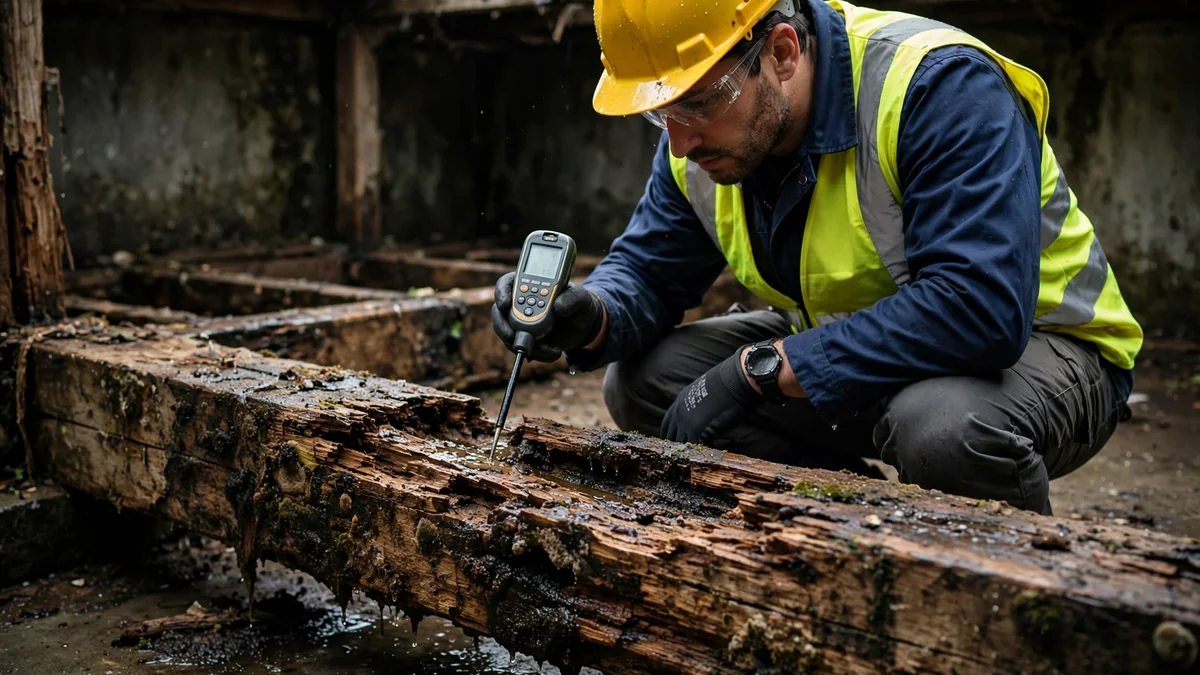
Why dampwood termites need very moist or decaying wood, and how pros find them.
Read Guide →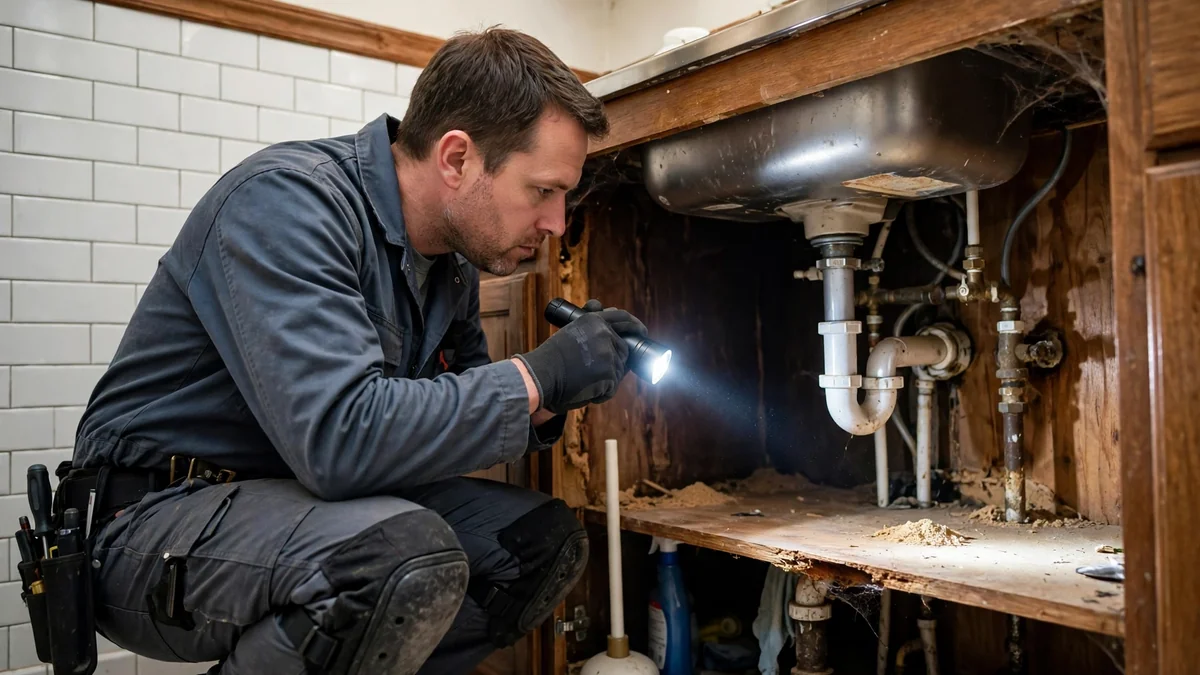
Termites in kitchens and bathrooms: where pros look first.
Read Guide →